
Arizona Felony Records
Arizona felony records are kept by county Superior Courts and the Arizona Department of Public Safety. Each of the 15 counties in Arizona stores criminal case files at the Clerk of Superior Court office. The state DPS runs the Central State Repository, which holds arrest and conviction data from law enforcement across Arizona. You can search these felony records online through court portals or request them in person at local offices. This guide shows you how to find criminal records, what fees to expect, and where to go in Arizona.
Arizona Felony Records Quick Facts
Where Arizona Felony Records Are Kept
Felony cases in Arizona go through the Superior Court system. This is the trial court level that handles serious crimes. Each county has one Superior Court. The Clerk of Superior Court keeps all case files. These files hold the charging documents, motions, court orders, and the final judgment. You can get copies from the clerk in the county where the case was heard.
The Arizona Department of Public Safety runs the Central State Repository. Under A.R.S. Section 41-1750, DPS collects arrest and disposition data from all criminal justice agencies in the state. This creates a statewide criminal history database. Law enforcement uses it for background checks. Individuals can review their own record for free. The DPS office is at 2222 W. Encanto Blvd. in Phoenix. You can reach them at (602) 223-2222 for criminal history questions.
The DPS Criminal History Records page explains how to access these records.
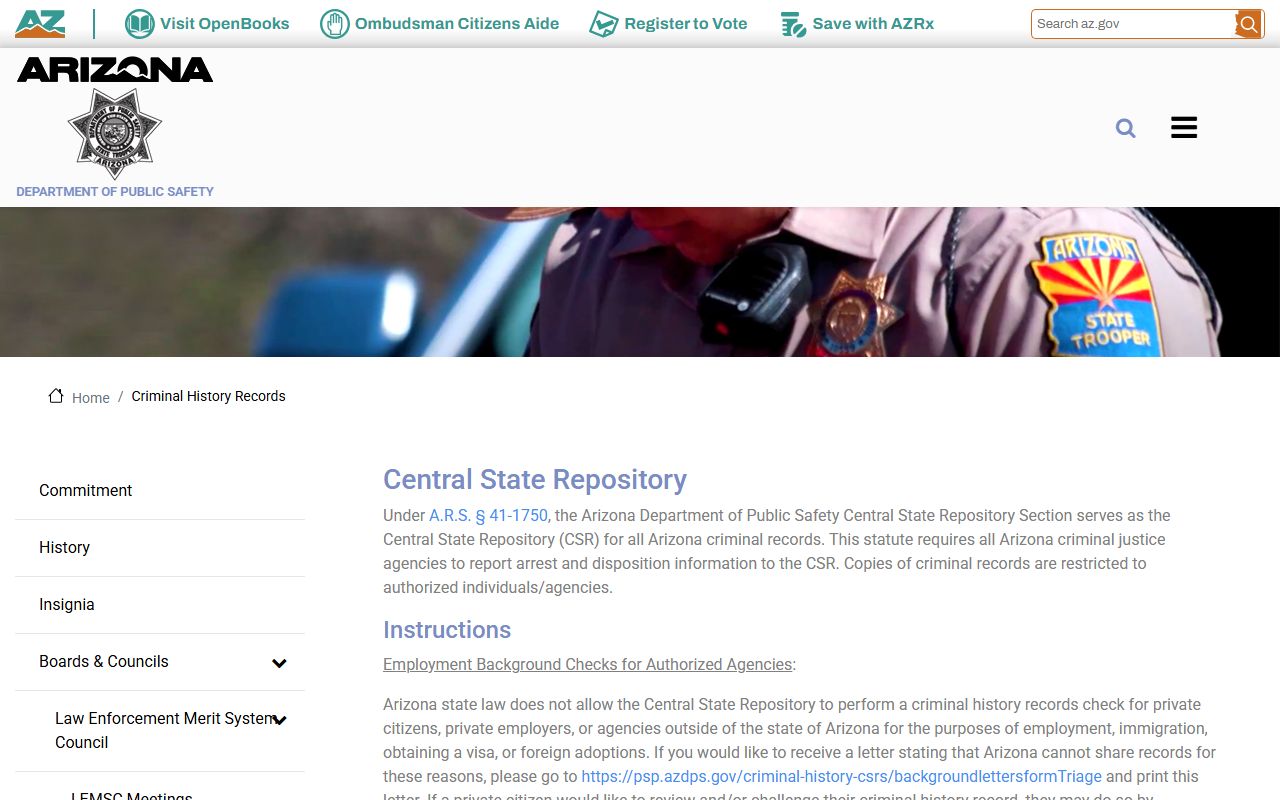
DPS handles the state copy of your record. Courts keep the original case files.
There is one key limit you should know. Arizona law does not let DPS run background checks for private employers or out-of-state requests. The Central State Repository cannot send records across state lines. Private citizens must use court records or hire a service that searches court files directly. This rule comes from state law and applies to all felony record requests made to DPS in Arizona.
How to Search Arizona Felony Records Online
Arizona offers several online tools for finding felony cases. The state court system has made many records available through web portals. You can search from home at any time. These tools cover most of the 15 counties in Arizona.
The Arizona Judicial Branch runs a Public Access Case Lookup that covers 177 courts across the state. You can search by name or case number. The system shows basic case info like the charges, hearing dates, and case status. This is a good starting point for any Arizona felony search.
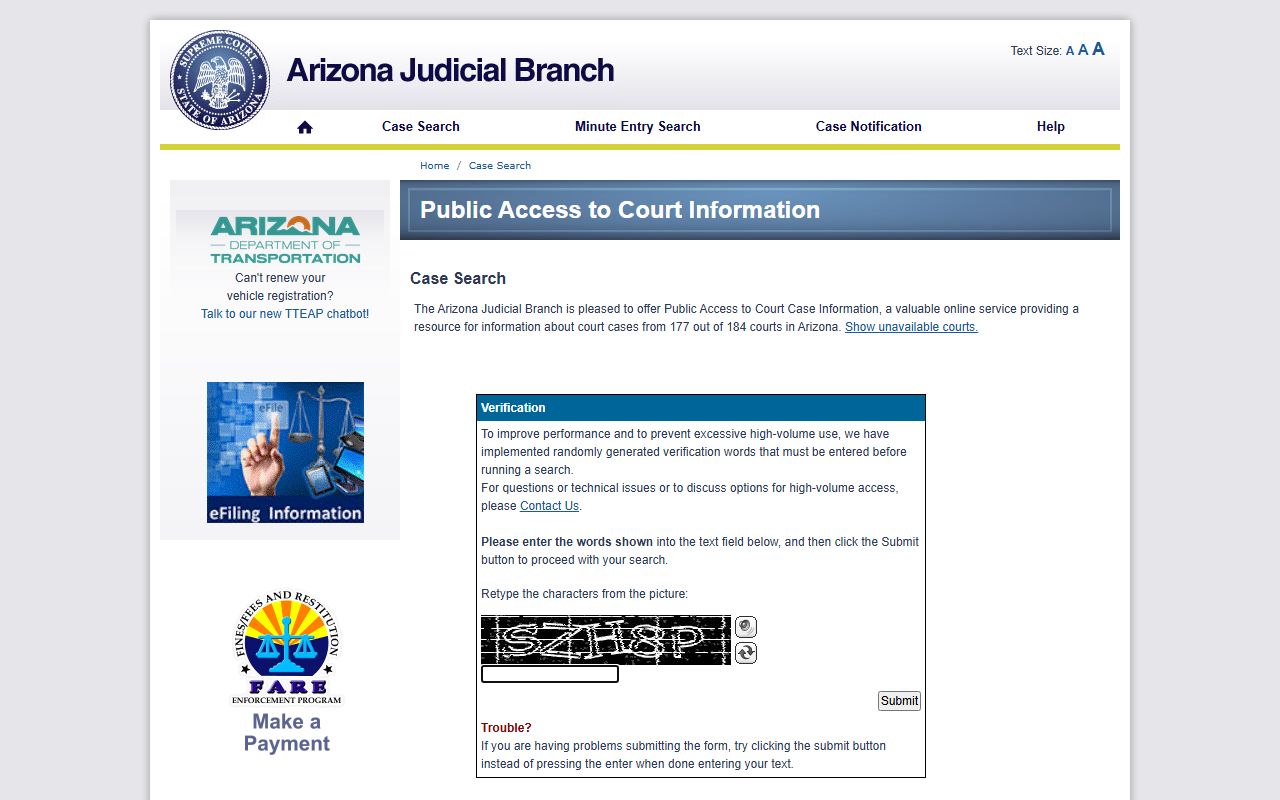
This portal is free to use for basic searches.
For more detailed records, Arizona has the eAccess portal. This system lets you view and download actual court documents. The first page of any document is free to preview. To see all pages, you pay $10 per document. Monthly subscriptions run from $80 to $10,000 based on usage. Media, attorneys, and frequent users often get subscriptions. Casual users can pay per document when they need access to Arizona felony case files.
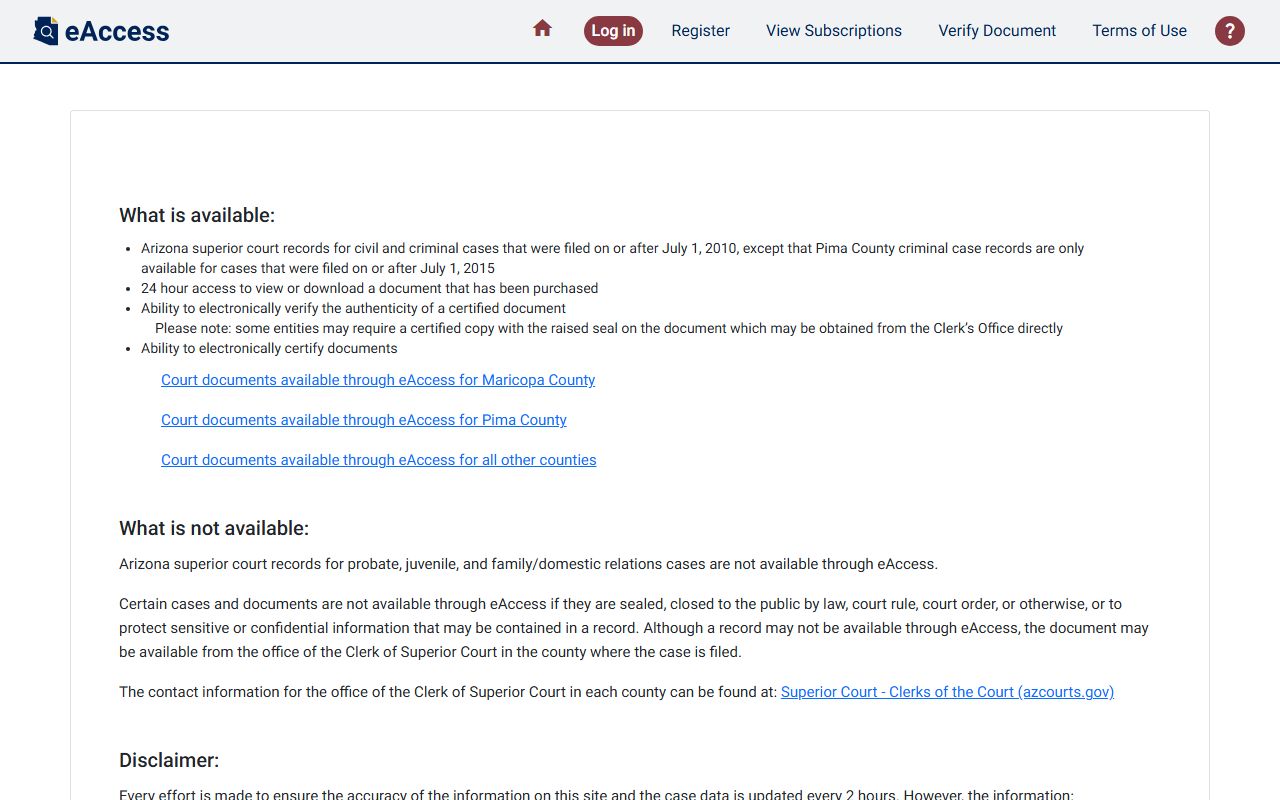
eAccess provides full document access for a fee. You can view filings, motions, and court orders from felony cases across Arizona.
The main Arizona Judicial Branch website has links to all court resources.
Use this site to find your local court or learn about court procedures in Arizona.
Arizona DPS Criminal History Records
The Department of Public Safety holds the official state criminal history database for Arizona. This is where arrest records and case outcomes get reported. If you were arrested in Arizona, your fingerprints and charges went to this repository. Court dispositions also get sent here after cases close. The result is a statewide record of criminal activity tied to fingerprints.
You can review your own Arizona criminal record for free. DPS has a Record Review Packet you must complete. The process takes about 15 days. You send in the packet with your fingerprints on an FBI FD-258 card. DPS then mails you a copy of whatever is in your file. This lets you check for errors. You can also get a background letter from DPS if you need proof of your record status.
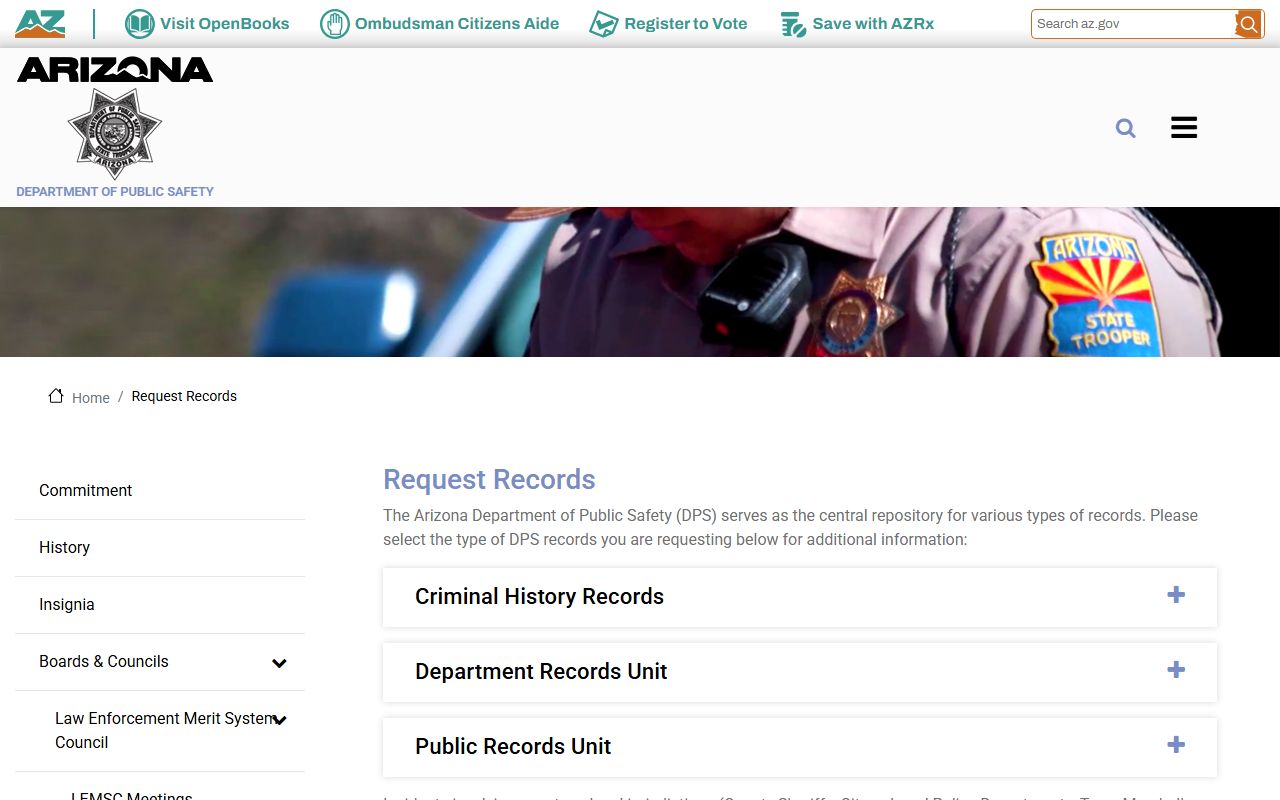
The DPS Records Request page has forms and instructions.
This portal handles requests for collision reports, incident reports, and criminal history.
The Public Services Portal lets you submit requests online and pay by credit card. This is the only method that accepts online payment for Arizona DPS records.
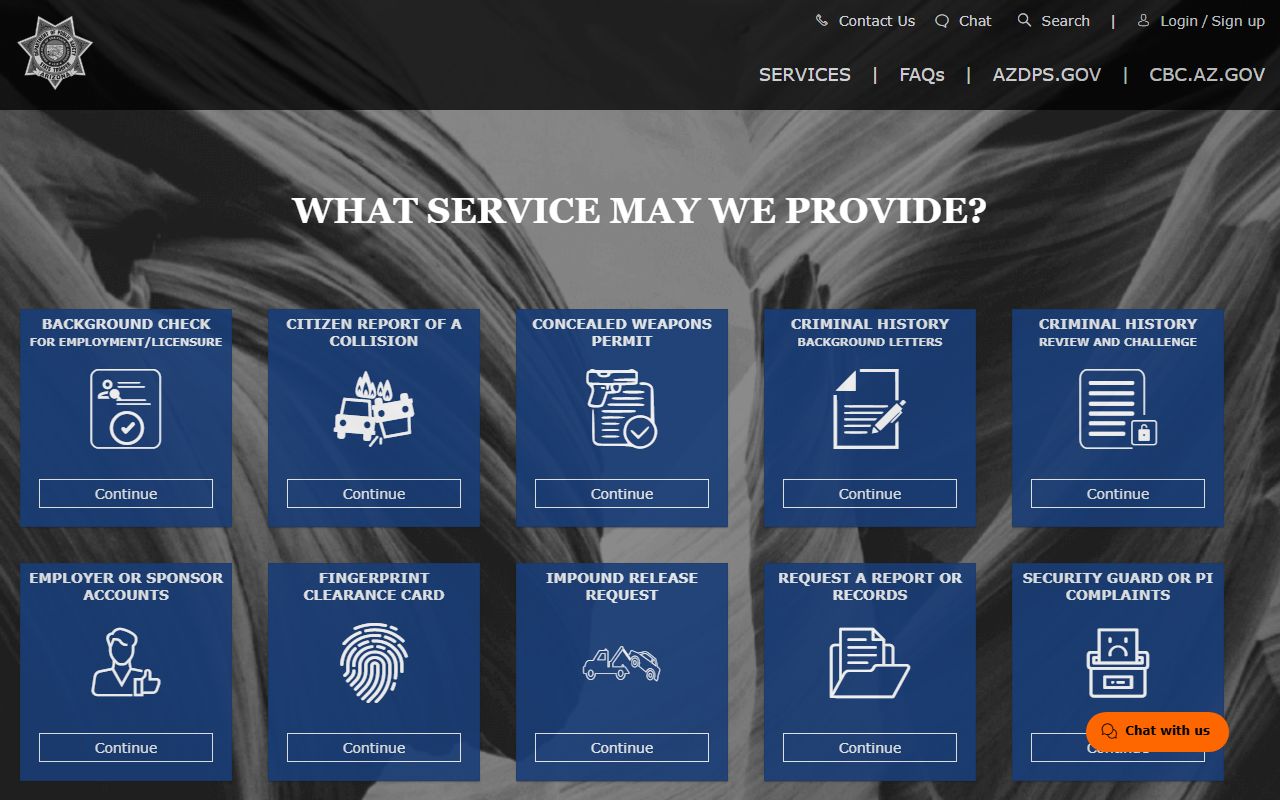
Wait at least 30 business days before checking on your request status. DPS has a large volume of requests to process.
Note: Personal checks are not accepted for DPS record requests in Arizona.
Arizona Fingerprint Clearance Cards
A Fingerprint Clearance Card is a type of background check used for jobs in Arizona. Many employers require one. Schools, healthcare facilities, and state agencies often ask for this card. The card shows you passed a criminal background check based on your fingerprints. DPS runs your prints against state and FBI databases to check for disqualifying offenses.
The card costs $67 and lasts six years. Volunteers pay $65. You apply through the DPS Fingerprint Clearance Card page. DPS cannot tell you in advance if you will qualify. They must run the check first. If you have a felony conviction, certain offenses will block you from getting a card.
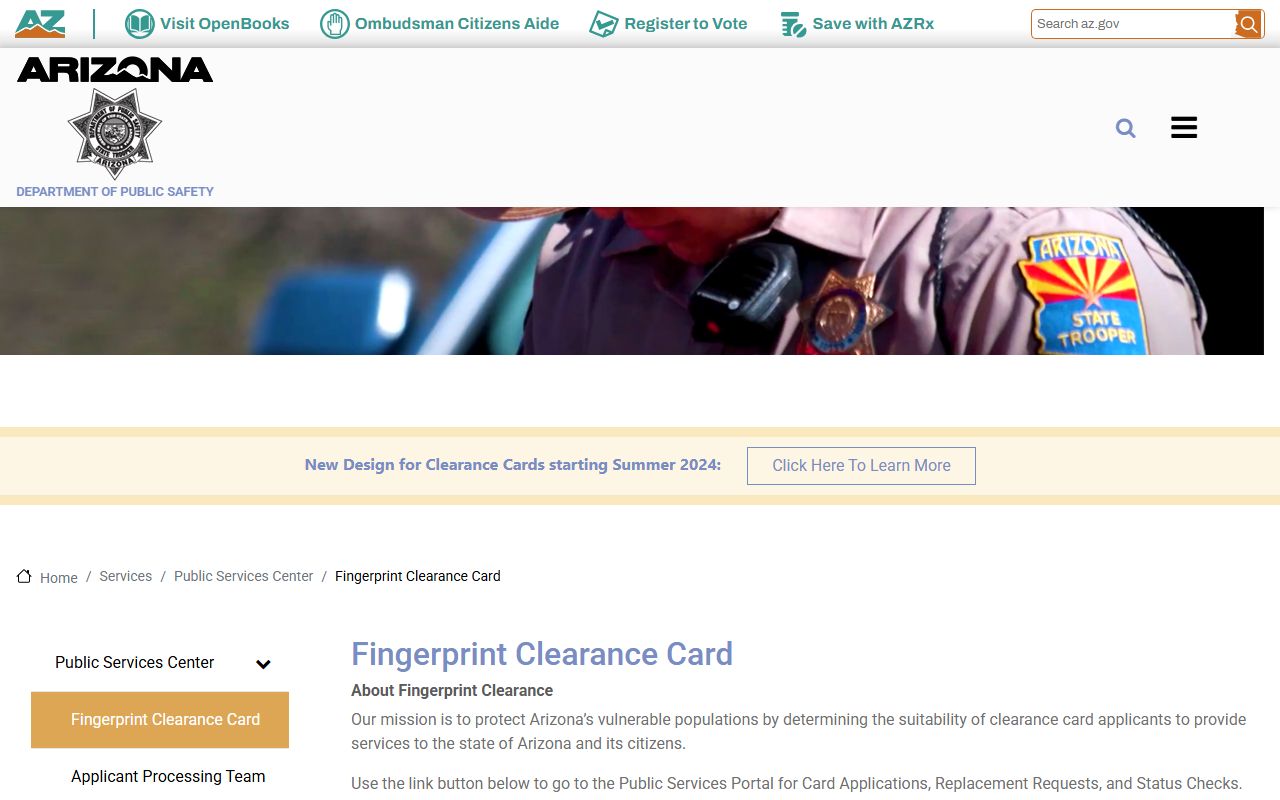
Apply online through the PSP portal. You will need to get your fingerprints taken at a separate location.
There are two card types. A Regular card has fewer disqualifying offenses under A.R.S. Section 41-1758.03. A Level One card has stricter rules under A.R.S. Section 41-1758.07. Some felonies block both card types. Others only block Level One cards. The type you need depends on your job. Check with your employer before you apply to make sure you get the right type for Arizona.
Arizona Administrative Office of the Courts
The Administrative Office of the Courts oversees the Arizona court system. This office sets policies for how courts handle records. They also run the statewide case management systems. If you have questions about court rules or record access, the AOC can help point you in the right direction.
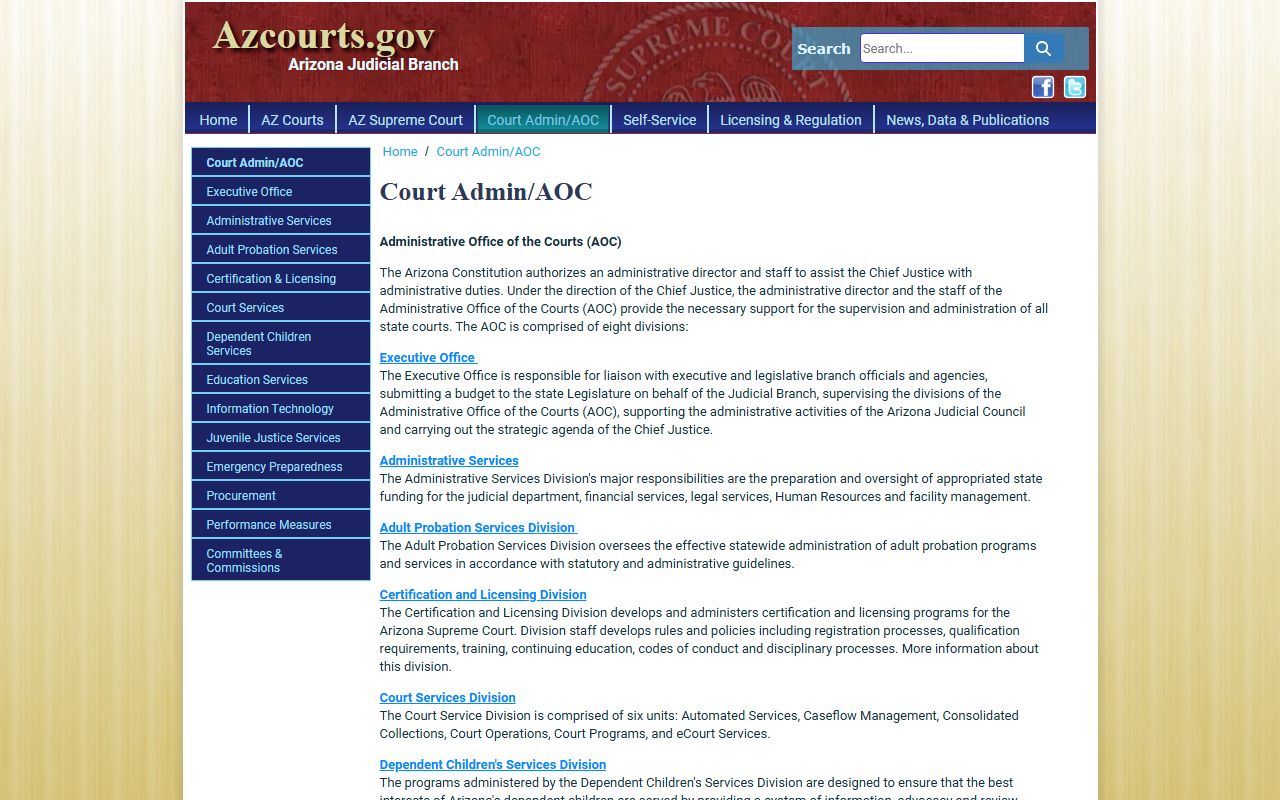
Contact the AOC at (602) 452-3300. Their office is at 1501 W. Washington St., Suite 411 in Phoenix.
Court records in Arizona are not covered by the regular public records law in Title 39. Instead, Arizona Supreme Court Rule 123 governs access to court records. This rule says court records are presumed open to the public. You can inspect records during regular business hours. Some information gets redacted from public copies. This includes financial account numbers and certain details about minors involved in cases.
Arizona Felony Record Sealing
Arizona allows some felony records to be sealed. This option became available on December 31, 2022. A.R.S. Section 13-911 sets the rules. You can petition the court to seal your case records if you finished your sentence and met the waiting period. The wait depends on the felony class.
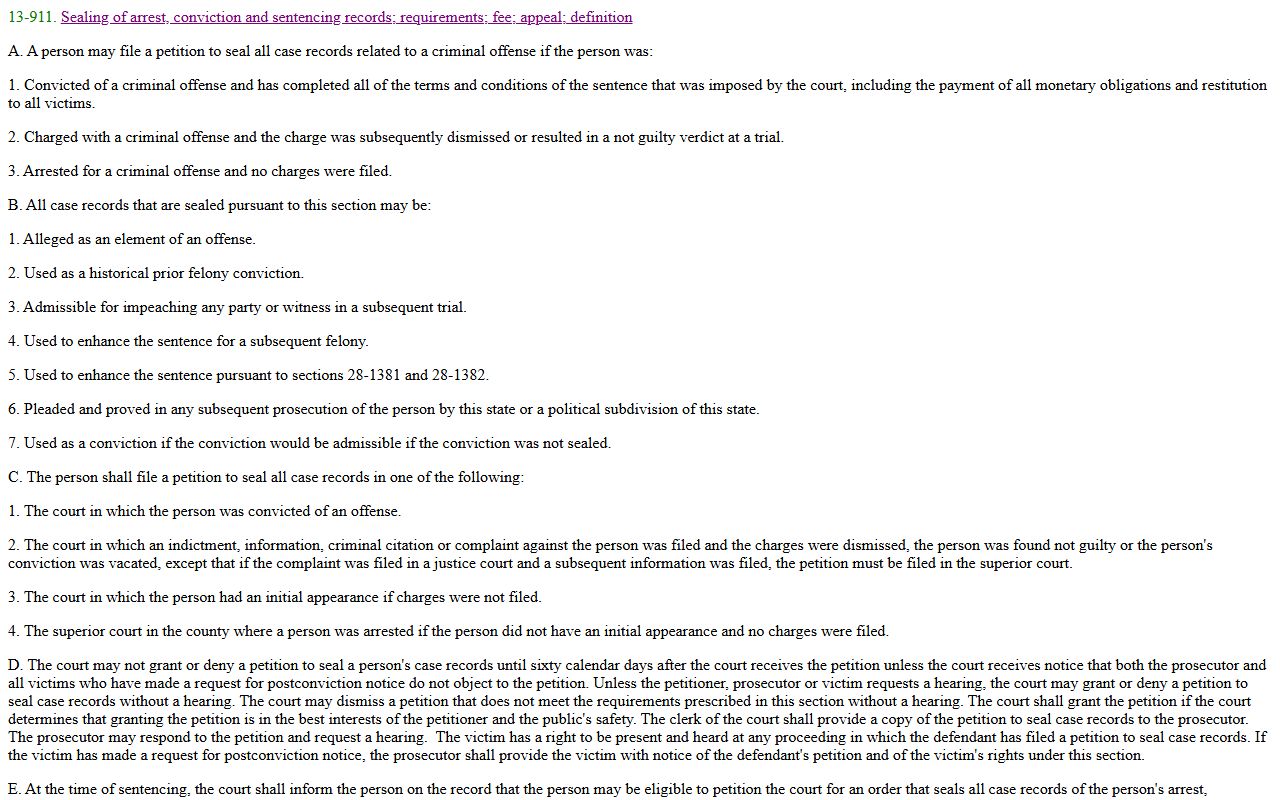
This statute explains who qualifies for sealing and what the process involves.
The waiting periods after completing your sentence are as follows:
- Class 2 or 3 felony: 10 years
- Class 4, 5, or 6 felony: 5 years
- Class 1 misdemeanor: 3 years
- Class 2 or 3 misdemeanor: 2 years
Some offenses cannot be sealed. Dangerous offenses, crimes against children, serious violent felonies, and sex trafficking convictions are not eligible. You file your petition with the court that handled your case. A judge will review it and decide whether to seal your Arizona felony records.
Arizona Public Records Law
Title 39 of the Arizona Revised Statutes covers public records in Arizona. This law gives citizens the right to inspect and copy government records. However, court records follow different rules under Supreme Court Rule 123.
Title 39 applies to executive branch records. Courts have their own access rules.
For felony records held by police departments or sheriff offices, you can make a public records request under Title 39. Fees vary by agency. Most charge per page for copies. Some have minimum fees of $5 to $10 for reports. Body camera footage costs more due to the time needed to review it. Each law enforcement agency in Arizona sets its own fee schedule within state guidelines.
The Central State Repository statute at A.R.S. 41-1750 explains how DPS manages criminal records.
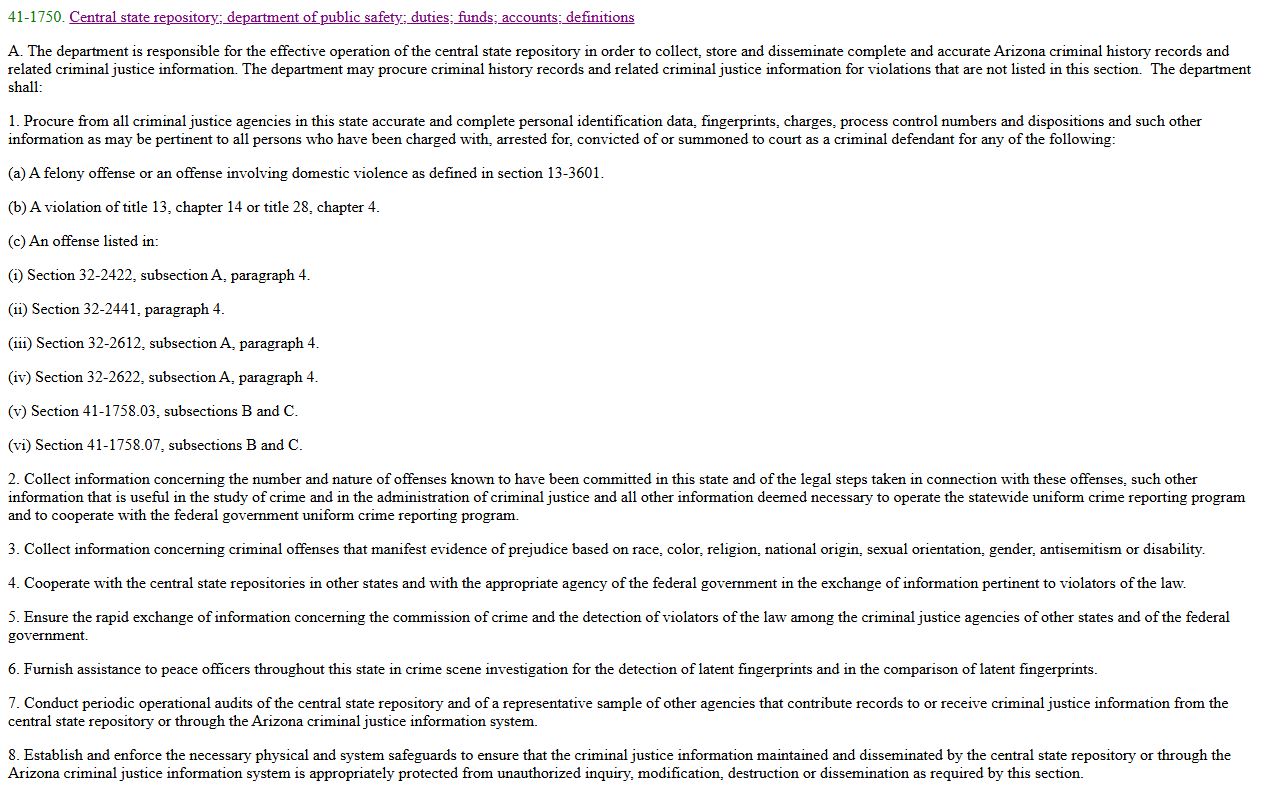
This law requires all Arizona criminal justice agencies to report arrest and disposition data to DPS.
Arizona Felony Record Fees
Fees for felony records vary by source. Court clerks charge $0.50 per page for plain copies. Certified copies cost $30 to $35 per document plus page fees. Research fees of $30 to $35 per year may apply if you need staff to search older records. Postage adds another $7 to $8 in most counties. Each county clerk sets exact fees within these ranges.
DPS charges $9 for records up to nine pages. Each extra page costs $0.10. Email delivery is $9 flat for files up to 5 MB. A DVD costs $15. Flash drives cost $20. Video requests cost $21.33 per half hour of review time. The Public Records Unit accepts credit cards online, cashier's checks, money orders, and business checks. No personal checks are allowed for Arizona DPS felony record requests.
Sheriff offices and police departments have their own fee schedules. Most charge $5 to $10 for basic reports. Body camera footage runs $44 to $46 per hour of video. Clearance letters typically cost $5 to $10. Call ahead to confirm current fees before visiting any Arizona agency.
Note: Fees can change, so always verify with the specific office before sending payment.
Browse Arizona Felony Records by County
Each county in Arizona has its own Clerk of Superior Court who keeps felony case records. Pick a county below to find local contact info and resources for felony records in that area.
Felony Records in Major Arizona Cities
Residents of major cities in Arizona file felony cases at their county Superior Court. Pick a city below to learn about felony records in that area.